What Westchester's Sepulveda–Manchester Pipeline Means for Single-Family Buyers
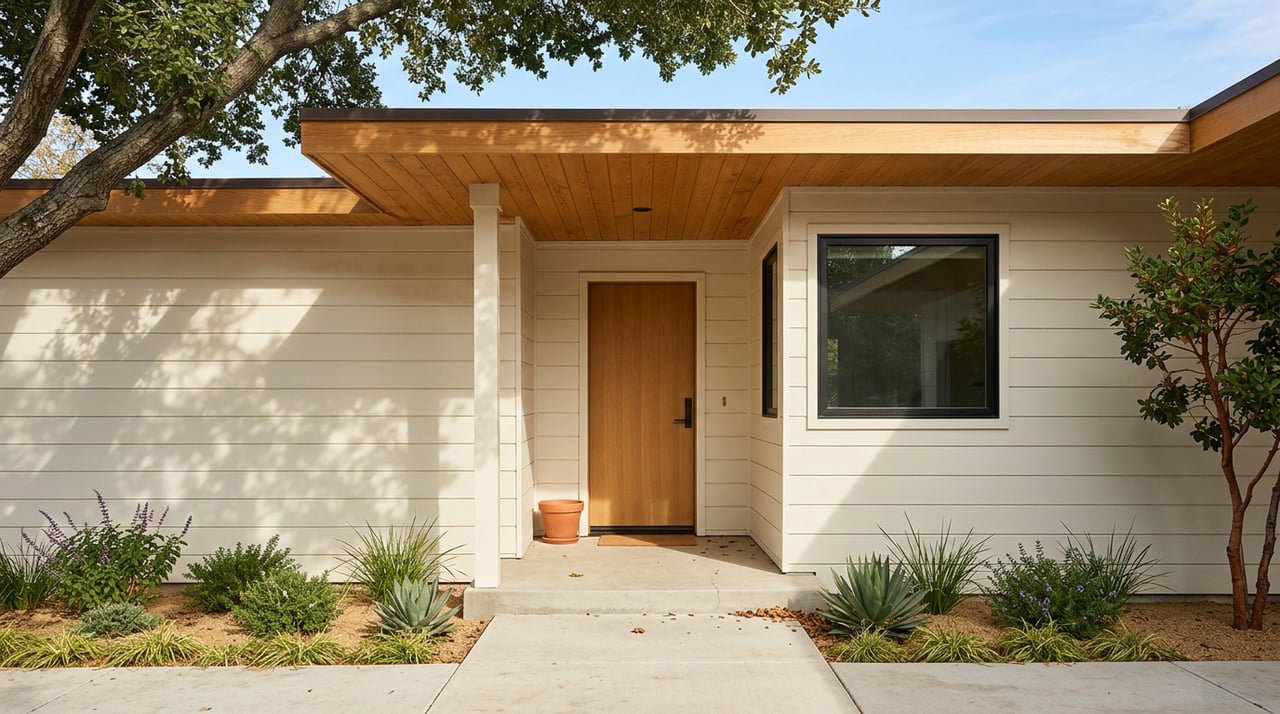
Walk two blocks off Sepulveda Boulevard in Kentwood and the street quiets down fast. Modest lots, mature trees, a golden retriever at the end of a driveway. Walk the other direction, toward the commercial spine, and you are standing inside one of the most concentrated apartment pipelines on the Westside. Six projects within a half mile. More than 1,500 units either approved, under construction, or complete. That contrast is the whole story if you are shopping single-family in 90045 right now.
Most buyer conversations about Westchester still orbit LAX, LMU, and the median price on the portals. Those are table stakes. The question worth asking in 2026 is narrower and more useful: what happens to the single-family blocks when the corridor next to them gets rebuilt at eight stories?
The thesis: Westchester's density is being redirected onto Sepulveda and Manchester by design, and the same policy tools that concentrate apartments there are the reason single-family pricing on the streets behind them has held firm while the national market softened.
Here is what is actually in motion along the Sepulveda–Manchester spine, addresses and all. If you have driven Sepulveda this year, you have passed most of these sites.
| Address | Project | Units | Status |
|---|---|---|---|
| 8521 Sepulveda Blvd | Caladan Investments / Lahmon Architects mixed-use on the former Grinder site | 87 | Exterior complete |
| 6136 W. Manchester Ave | Cityview eight-story mixed-use, AC Martin design, replacing a Pep Boys and Del Taco | 441 | Approved, targeted for 2027 completion |
| 6501 S. Sepulveda Blvd | Mixed-use next to the former Dinah's site | 362 | On the rise |
| 8820 Sepulveda Blvd | SCAH-LA / 64North ED1, replacing the shuttered Bed Bath & Beyond and Starbucks parcels | 333 | Application under review, stalled |
| 8819 Sepulveda Eastway | SCAH-LA / 64North ED1 on a surface parking lot | 413 | Application under review, stalled |
| 8704 S. Sepulveda Blvd | Senior housing on the current Staples site | TBD | Proposed |
| 9033 Ramsgate Ave | Affordable housing with a $31.3M construction loan | TBD | Underway |
| 8333 Airport Blvd | Redtail Crossing from Community Corp. of Santa Monica, described as the neighborhood's first supportive housing complex | 102 | Revealed |
A few of these are worth understanding in more detail because the mechanism inside them is what matters.
The 8521 Sepulveda building sits on an L-shaped property which was previously home to a Grinder restaurant, and consists of a six-story building with 87 apartments above an 82-car garage and approximately 900 square feet of ground-floor retail space. It got there because the developer entitled the complex using Transit Oriented Communities incentives to allow a larger building than zoning rules would otherwise permit, and in exchange, eight of the apartments will be set aside as deed-restricted extremely low-income housing for a period of 55 years. That is the trade: bigger building, permanent affordability on a fraction of the units, and the whole thing goes on Sepulveda instead of a residential street.
The Cityview project at 6136 W. Manchester follows the same logic at a much larger scale. Plans call for a new eight-story building featuring 441 studio, one-, and two-bedroom apartments above approximately 16,000 square feet of ground-floor commercial space and parking for 549 vehicles. Under revised plans, the developer pitched to add more housing units to the proposed mixed-use project by utilizing AB 1287 to increase the unit count, and open landscaped areas will include a large outdoor plaza at Truxton and La Tijera, imagined as a gateway to the neighboring Westchester Town Center, with a podium-level courtyard, terrace decks, and a pool.
The two SCAH-LA proposals at 8820 Sepulveda and 8819 Sepulveda Eastway are the wild cards. In a check-in with CD11 staff on February 18, 2026, the Neighborhood Council reported that the ED1 buildings are currently stalled under application review with Planning, and that the developer may be experiencing funding and financing challenges, which is a common issue across LA where buildings are approved but not yet built. The Ramsgate-area ED1 project, by contrast, is moving. That split matters for buyers timing a purchase.
Here is where the story diverges from the national narrative. In the second quarter of 2026, Westchester's median sale prices tracked essentially even with 2025 across April, May, and June, even as the national narrative of softening prices played out in inventory-heavy Sun Belt markets, because the structural supply constraints that define the Westside continue to support pricing here in a way that the national aggregate does not capture. Months of supply on the Westside sits at roughly three, well below the balanced-market threshold.
Redfin's read looks different at a glance. In March 2026, Westchester home prices came in at a median of $1.5M with homes selling after 53 days on the market compared to 45 days last year. Zillow's ZHVI for the neighborhood shows an average value of about $1.43M, down 3.9% over the past year, going to pending in around 18 days.
Two different pictures. Reconcile them and the answer is thin transaction volume amplifying every quarter's mix. There were 47 homes sold in March this year, down from 56 last year. On that count, one $3M sale on a Kentwood cul-de-sac or one probate teardown moves the median hundreds of thousands of dollars. The quarterly data smoothed across April, May, and June is the more honest read.
The single-family half of Westchester is protected by geometry, not by charm. Approximately 50% of the local housing stock consists of single-family detached homes, most of which are modestly sized on small lots, while the commercial districts run along the main arteries of Lincoln Boulevard, Sepulveda Boulevard, and Manchester Avenue. Transit Oriented Communities incentives, AB 1287 bonuses, and Executive Directive 1 all key off commercial or transit-adjacent parcels. They do not unlock the interior blocks.
The practical result: every new eight-story ED1 tower approved on Sepulveda is a unit of housing demand that will not compete with a Kentwood buyer for a three-bedroom on Kittyhawk. The corridor absorbs the growth. The interior absorbs the value.
That is why a portal median for 90045 tells you almost nothing useful. The zip code contains a rental submarket that is being remade this decade and an owner submarket that is deliberately being held stable. A buyer who reads one number for both gets the wrong plan.
If you are writing offers on the streets behind Sepulveda, the pipeline creates a handful of specific things worth checking before you remove contingencies.
None of this shows up on a listing description. It shows up in how a house lives after you close.
Not on the R1 blocks themselves, based on how the entitlements are structured. The projects use commercial-parcel and transit-adjacent tools that stop at the zoning line. The character change is on the corridor.
The math argues against waiting. Westchester months of supply at 3 is well below the balanced-market threshold, and the Westside is subject to the same mortgage rate swing factor as the national market. Rates, not future apartment deliveries, are the variable that moves the entry price on the streets you actually want.
The Kentwood and North Kentwood blocks within walking distance of the future Manchester plaza gain the most day-to-day utility without absorbing the density themselves. That is the geography worth touring first if walkability to new retail is on your list.
If you are weighing a Westchester purchase against Mar Vista, Culver City, or points north, the smartest next step is a walk with someone who has traded these blocks through the last three cycles. Debbie Weiss works Westchester and the surrounding Westside micro-markets every week, and the neighborhood page is a good place to start before we talk. Let's connect.
Debbie is always available to talk about your real estate goals and help you get there. She loves what she does, connecting people and homes, so your call or text is always welcome.