How Santa Monica Duplex & Triplex Buyers Should Price Turnover
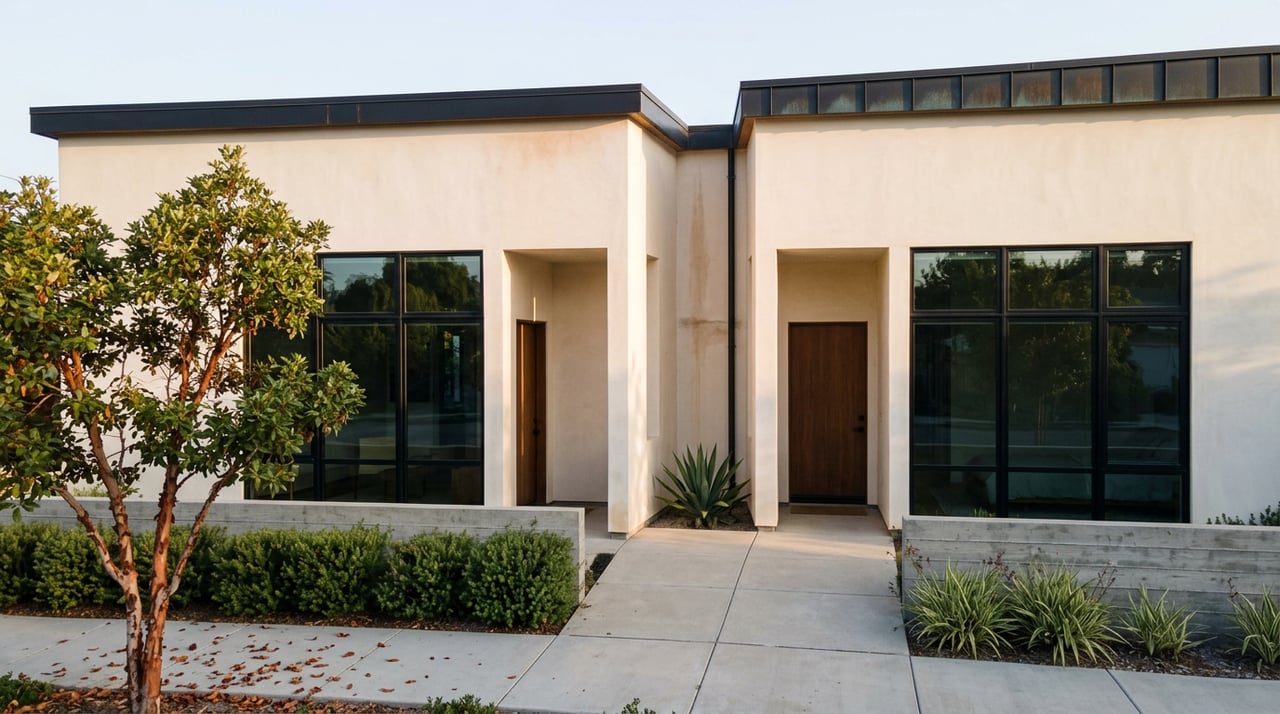
Why would two Santa Monica duplexes, same block, same square footage, same year built, sell for prices six figures apart? Not because one has better light or a newer roof. Because of something you cannot see from the street: how long the tenants have lived there, and whether either unit has turned over since the last owner bought.
That gap shows up constantly in how Santa Monica multifamily gets underwritten. One local rent control guide put it plainly: a building trading at a 3.5 percent cap rate on current income might underwrite to a 5.5 percent cap rate once every unit turns over to market rent. Same walls. Same lot. Two entirely different valuations, depending on a variable that has nothing to do with the building itself.
If you're evaluating a duplex or triplex in Santa Monica, this is the fact that should change how you read a rent roll. The number on the listing sheet is not the price. It's one snapshot in a range that moves with tenant tenure, and understanding where a specific building sits in that range is the actual work of buying rent-controlled real estate here.
The City of Santa Monica says voters adopted Santa Monica's rent control charter in April 1979; Favia Investment Group says it applies to any residential building that received its certificate of occupancy before April 10 of that year. That covers most duplexes and triplexes in the city, not just larger apartment buildings. Once a building falls under the charter, every occupied unit is capped at a Maximum Allowable Rent that the Rent Control Board adjusts annually. For the period running through August 2026, that adjustment was set at 2.3 percent, with a hard ceiling of $60 a month, according to the City of Santa Monica. The Board has since set the 2026 General Adjustment at 2.6 percent with a $70 ceiling, applying to units already renting at $2,674 or more.
Those numbers matter less on their own than what they do to price. A rent roll full of long-tenured tenants paying well under market looks stable, but it also depresses what a buyer can pay for the building today, because the income won't move much until a unit turns over. One recent Santa Monica selling guide estimated that tenant-occupied rent-controlled buildings sell 15 to 25 percent below otherwise identical vacant or owner-occupied properties, and that a single vacant unit can add $150,000 to $400,000 to a sale price. That's not a rounding error. That's the market pricing the difference between income you have today and income you might get in three years.
The mechanism behind that gap has a name: vacancy decontrol. It's a state-law overlay from the Costa-Hawkins Rental Housing Act, and it works like this. While a tenant remains in place, the unit stays capped at its Maximum Allowable Rent under the city charter. As BH Real Estate Law explains, the moment that tenant leaves voluntarily, not through eviction or a buyout, the next rent can reset to market.
In plain terms: rent control caps what an occupied unit can charge. It does not cap what the next tenant pays once the current one leaves on their own. The unit's controlled rent and its market rent are two different numbers, and the distance between them is exactly what a buyer is underwriting.
This is why sophisticated buyers in this market don't just read the current rent roll. They ask how long each tenant has been in place, because tenure predicts how soon that gap closes. A tenant of two years is a different underwriting assumption than a tenant of twenty.
A common assumption among first-time small multifamily buyers is that a full renovation exempts a building from rent control, since the property no longer resembles what it was in 1979. That assumption is wrong, and it's wrong in a way that can quietly blow up a deal's pricing if it isn't caught before close.
The charter's exemption for newly constructed units, under Charter Section 1801(c), is interpreted narrowly by the Rent Control Board. A complete demolition followed by ground-up construction qualifies for the exemption. A gut renovation that keeps the foundation or load-bearing walls does not, no matter how extensive the interior work. If you're looking at a duplex marketed as fully remodeled, that remodel alone tells you nothing about whether the units are still subject to the Maximum Allowable Rent system. The certificate of occupancy date is what governs, not the finishes.
Buyers looking at a triplex sometimes plan to occupy one unit and keep the other two rented, or to eventually take over more of the building for family. Santa Monica's rules here are stricter than what state law requires elsewhere in California.
The city's owner-occupancy ground for eviction requires the owner or a qualifying relative to live in the unit as a principal residence for a minimum of three consecutive years. Statewide, under AB 1482's SB 567 amendments, that requirement is twelve months. The owner also has to file a sworn declaration with the Rent Control Board documenting intent, and failing to occupy for the full period exposes the owner to penalties and possible restoration of the prior tenant's tenancy.
If the plan instead involves withdrawing the entire building from the rental market under the Ellis Act, the timeline runs like this:
That ten-year tail is easy to miss when a buyer is focused on the sale price of a vacant building. It's worth knowing before you build a plan around converting rental units to owner use.
Every Santa Monica multi-unit sale should come with a defined disclosure package. If the building has balconies, decks, or other exterior elevated elements, state law under SB 721 also requires inspection by a qualified professional, which matters for older Santa Monica stock where those features are common.
The city has also been tightening its own oversight. In October 2025, the Rent Control Board adopted a new regulation limiting how landlords apply accumulated, or banked, general adjustment increases, capping them at 10 percent in any twelve-month period rather than allowing owners to apply years of deferred increases all at once, as reported by Santa Monica Next in its coverage of the Board's 2025 Annual Report. That's a small procedural change, but it's a signal the Board is actively managing how fast rents catch up on turnover, which feeds directly back into how a buyer should model that gap between current and market rent.
None of this makes rent control a reason to avoid a Santa Monica duplex or triplex. It makes it a variable to model rather than a line to skim. Before you make an offer, the questions worth asking mirror what commercial underwriters already check on larger buildings: how long has each tenant been in place, is every unit properly registered with the Rent Control Board, has the building had any contested evictions or Board complaints, and what capital work, retrofit, plumbing, roofing, SB 721 compliance, is coming due. The city's Rent Control Board maintains a public registry search where a unit's registration and rent history can be checked directly.
If you're weighing a duplex or triplex against a single-family home or condo in the same part of the city, the trade-offs are different enough that they deserve their own comparison, which we've covered separately for buyers looking at condo versus house in Santa Monica. And if you're on the selling side of one of these buildings rather than the buying side, the same tenure and vacancy math determines your asking price, which is worth understanding before you list.
Does every duplex or triplex in Santa Monica have rent control? Not automatically. Coverage depends on the certificate of occupancy date. Buildings that received their certificate before April 10, 1979 are covered. Properties built after that date generally are not subject to the local charter, though they may still fall under the state's AB 1482 protections.
Can I buy a rent-controlled triplex and just convert it to a single-family home? Not immediately, and not without following either the owner-occupancy process, which requires three consecutive years of residency, or the Ellis Act process, which comes with mandatory relocation payments and the former tenants' right of first refusal for ten years.
If a tenant has lived in the building for a long time, does that hurt the sale? It affects the price, not the ability to sell. Long tenure usually means lower current rent and a longer runway before that unit resets to market, which is exactly the kind of detail a buyer should be pricing in rather than discovering after close.
Rent control math in Santa Monica rewards buyers who ask the right questions before they write an offer, not after. If you're evaluating a duplex or triplex here and want a clear read on what the rent roll is actually telling you, Debbie Weiss can walk through the registration history, tenure, and turnover picture with you before you commit. Let's Connect.
This article is general information, not legal, tax or financial advice. Consult a qualified professional about your situation.
Debbie is always available to talk about your real estate goals and help you get there. She loves what she does, connecting people and homes, so your call or text is always welcome.