Condo Or House In Santa Monica? Key Tradeoffs For Buyers
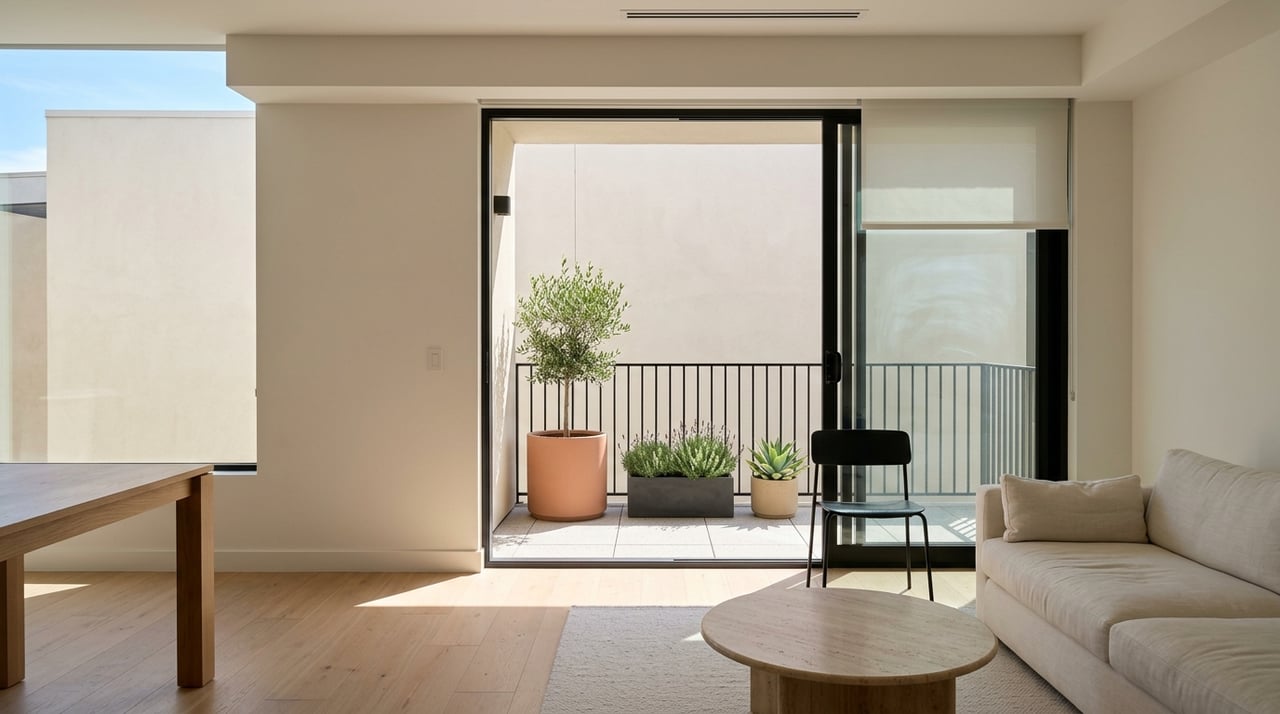
Choosing between a condo and a house in Santa Monica is not just about style. It is often about how much you want to spend each month, how much space you need, and how much control you want over your property. If you are trying to balance budget, lifestyle, and long-term plans, this guide will help you sort through the real tradeoffs in this market. Let’s dive in.
In Santa Monica, condos and houses usually sit in very different price ranges. Redfin’s city data put the all-home-types median sale price at $1,743,956 in May 2026, while its condo page showed a current condo median listing price of $1.2 million. That gap alone is enough to shape many buyers’ short list.
Inside the condo market, pricing still varies a lot. Current examples range from a one-bedroom condo at $635,000 to two-bedroom units around $1.075 million to $1.475 million, and a three-bedroom condo at $2.149 million. That means you may find a condo entry point that keeps you in Santa Monica without stretching into detached-home pricing.
Detached homes are usually in a higher bracket. Recent single-family examples showed values around $2.56 million, $2.71 million, and $6.62 million, with at least one current detached listing at $7.9 million on an 8,716-square-foot lot. If your budget is close to the middle of Santa Monica’s market, a condo may open more options than a house.
For many buyers, the condo-versus-house decision gets decided by monthly carrying costs, not just sticker price. A condo may come with a lower purchase price, but it also adds HOA dues as a separate monthly expense. A house skips HOA dues in many cases, but the higher purchase price often drives up mortgage costs, taxes, and upkeep.
Using Freddie Mac’s June 25, 2026 average 30-year fixed rate of 6.49%, a 20 percent down, $1.2 million condo works out to about $6,062 per month in principal and interest. A 20 percent down, $2.295 million house comes to about $11,593 per month in principal and interest. That is a major difference before you even add taxes or maintenance.
With a simple estimate of 1 percent base property tax and a $600 HOA assumption, the condo example lands around $7,662 per month. With the same 1 percent base tax and a $500 maintenance reserve, the house example reaches about $14,005 per month. These figures are illustrative only, and they do not include insurance, utilities, or special assessments, but they show why monthly budget often becomes the deciding factor.
In Los Angeles County, the base property tax is 1 percent of assessed value, but direct assessments and voter-approved debt service can push the actual bill higher. In practice, that means the tax line on a house can become meaningfully larger simply because the purchase price is higher. If you are comparing options in Santa Monica, it helps to look beyond the down payment and focus on the full monthly picture.
A condo can be a strong fit if you want a Santa Monica address with a lower entry price and less exterior upkeep. In California, condo ownership is part of a common-interest development, which means you are buying both your unit and membership in the homeowners association. The HOA manages common areas, collects dues and assessments, and enforces the building’s governing documents.
That structure can simplify some parts of ownership. One current Santa Monica condo listing notes that HOA dues cover water, gas, sewer, trash, building maintenance, property management, and master insurance for the building, including earthquake coverage for the building shell rather than the interior unit. If you value convenience and fewer property tasks, that can be a real advantage.
The tradeoff is that your ownership comes with rules, shared decision-making, and financial exposure to the building’s overall health. HOA dues in current Santa Monica listings range from about $500 to $1,737 per month. Before you buy, it is important to understand what those dues cover and whether the association may face future repair costs or special assessments.
A detached house usually gives you more privacy, more private outdoor space, and more direct control over your property. Santa Monica single-family examples mention features like backyard patios, larger yards, and lot sizes roughly in the 4,700- to 9,000-square-foot range. If outdoor living is high on your list, that extra footprint can be hard to match in a condo.
A house also gives you more freedom to maintain, update, and use the property without an HOA rulebook. That flexibility matters if you want room to grow into the home over time. It can also matter if you simply prefer not to share walls or common spaces.
The tradeoff is that you take on more responsibility. Maintenance is no longer spread across a building association, and costs can come up unevenly. Even if you set aside a simple monthly maintenance reserve, the real expense can vary depending on the age of the home, systems, roof, exterior, and landscaping.
If long-term flexibility is a top priority, houses usually have the edge in Santa Monica. The city says some one-story additions to single-family dwellings up to 500 square feet may qualify for its Express Permit process. Santa Monica also offers a preapproved ADU program for qualifying residential and mixed-use properties.
That does not mean every house is easy to expand, but it does mean detached ownership can create more options over time. If you think you may want a home office, more living space, or an accessory dwelling unit later, a house may better match that plan. For buyers who want control over future changes, that can be a deciding factor.
Condos can still work well for the right buyer, but the homework is different. Fannie Mae advises condo buyers to review whether the project is warrantable, how large the reserve fund is, and whether parking is included. The California Department of Real Estate also makes clear that HOA documents control maintenance responsibilities, dues, and common-area rules, so those documents deserve close attention before you commit.
Insurance is another important difference between condos and houses in Santa Monica. The California Department of Insurance says a condo HOA may insure common areas and the exterior structure, but that coverage may not extend to earthquake damage in those areas or to the interior of your unit. That means condo buyers should understand exactly where the HOA policy stops and where their own coverage needs to begin.
The California Earthquake Authority offers earthquake policies for both homeowners and condo-unit owners. Whether you buy a condo or a house, it is worth asking what is covered, what is not, and what your personal responsibility would be after a loss. In a market like Santa Monica, those details should be part of your budget conversation, not an afterthought.
In the upper end of the Santa Monica market, transfer tax can become a bigger factor for house buyers. The city charges $3 per $1,000 under $5 million, $6 per $1,000 from $5 million to $7,999,999.99, and $56 per $1,000 at $8 million and above, plus the county transfer tax. While this does not affect every purchase, it can materially raise closing costs on very high-priced detached homes.
That does not automatically make a condo the better choice. It simply highlights how the gap between condos and houses in Santa Monica is not only about purchase price. The farther up the price ladder you go, the more important it becomes to understand every line item.
If your top priorities are location, convenience, and a lower entry price, a condo may be the better fit. You may be able to stay in Santa Monica with a smaller upfront commitment and less exterior maintenance. That can be especially appealing if you want a more lock-and-leave lifestyle.
If your top priorities are privacy, outdoor space, and the ability to modify your property over time, a house may make more sense. You will usually pay more each month, but you may gain the kind of control and flexibility that matters more in the long run. For many buyers, that tradeoff is worth it.
The smartest move is to compare properties based on your real monthly budget, your day-to-day lifestyle, and your future plans. In Santa Monica, the right answer is rarely just “condo” or “house.” It is the option that fits how you want to live now and what you want your home to do for you later.
If you want help weighing specific Santa Monica condos and houses side by side, Debbie Weiss can help you compare costs, lifestyle fit, and neighborhood options with a local, high-touch approach.
Debbie is always available to talk about your real estate goals and help you get there. She loves what she does, connecting people and homes, so your call or text is always welcome.